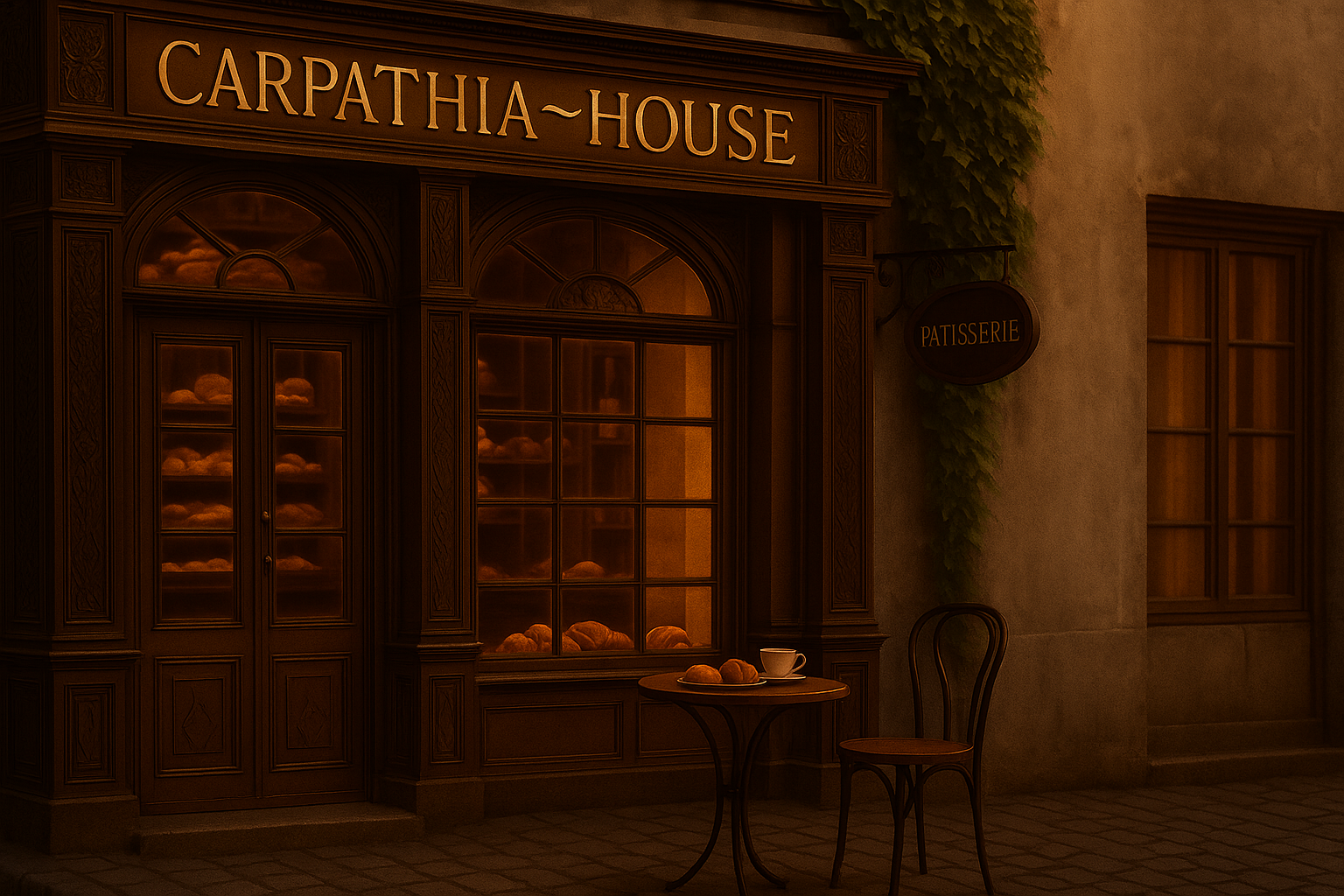


The Flour Remembers: A Story of Heritage at Carpathia~House
In the hush before dawn, there is a moment—silent, sacred—when flour floats like memory through amber light, and the wooden table becomes an altar.
This is how our story begins. Not in boardrooms or marketing meetings, but in the faded kitchens of the old world, where our grandmothers wore linen aprons stitched with roses, and kneaded dough with the weight of centuries in their palms.
At Carpathia~House, heritage is not an aesthetic—it is our backbone, our breath. The recipes we revive are not merely instructive; they are evocative. Each one bears a name, a region, a season, a secret. Each one was whispered from mother to daughter, scribed on the back of flour sacks, passed hand to trembling hand across borders and wars and weddings and winters.
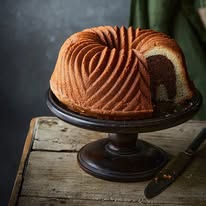
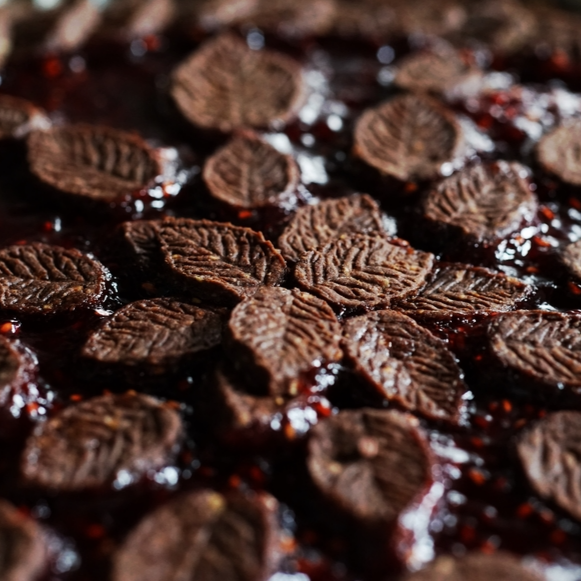
We bake Pfeffernüsse the way Aunt Zsófia once did: with warm anise and black pepper, shaped at Christmastide in the Carpathian chill. We layer our Zuger Kirschtorte not to impress, but to remember the alpine birthdays it once crowned. And when we press syrup into our Baklava, it is with the same deliberate stillness taught by those who prized patience over plenty.
This is why we are gluten-free by devotion, not trend. For many of us, intolerance is not merely dietary—it is generational. It is the ache of displacement. And so, to reclaim the loaf, the torte, the sweet—without compromise—is to reclaim our place at the table.
At Carpathia~House, we are not recreating the past. We are restoring its dignity, one bake at a time.
Come. Taste what the flour remembers.